
7 Signs You Need a New Roof in BC: A Homeowner's Guide

Your roof is one of the most important systems protecting your home, yet many homeowners don't realize there's a problem until water starts coming through the ceiling.
In British Columbia's Lower Mainland, roofs face demanding conditions. Heavy rainfall, prolonged moisture, moss growth, windstorms, and seasonal temperature changes can gradually wear down roofing materials.
Whether you live in Vancouver, Burnaby, Surrey, Langley, Maple Ridge, Abbotsford, or elsewhere in the Fraser Valley, recognizing the early warning signs of roof
deterioration can help prevent expensive water damage and unexpected repairs.
So, how do you know when it's time to replace your roof?
The 7 Signs You Need a New Roof in BC are:
Curling, cracking, or missing shingles
Recurring roof leaks or interior water stains
Excessive granule loss from asphalt shingles
Moss growth and persistent moisture problems
Sagging roof sections or deteriorating roof decking
Attic moisture, mold, or ventilation problems
An aging roof that requires increasingly frequent repairs
Not every warning sign means your entire roof must be replaced. Some problems can be corrected through maintenance or targeted repairs. However, when multiple warning signs appear together, a professional roof and attic inspection becomes especially important.
Let's examine each sign, what it means, and how to determine whether your roof needs repair or replacement.
7 Signs You Need a New Roof in BC: What Should Homeowners Look For?
The most reliable way to evaluate an aging roof is to examine both the exterior roofing materials and the conditions beneath them.
Visible deterioration may indicate that shingles are approaching the end of their useful life. However, problems involving flashing, ventilation, insulation, or the underlying roof deck may not be obvious from the ground.
Here are seven warning signs Lower Mainland homeowners should recognize.
1. Curling, Cracking, or Missing Asphalt Shingles
One of the clearest indicators of roof deterioration is damage to the asphalt shingles themselves.
Over time, exposure to sunlight, rain, temperature changes, and wind can cause shingles to lose flexibility and deteriorate.
Common warning signs include:
Shingle edges curling upward
Cracks developing across individual shingles
Missing or wind-damaged shingles
Shingles becoming brittle or breaking apart
Uneven or visibly deteriorating roof sections
.
A few damaged shingles may be repairable if the surrounding roof remains in good condition.
However, widespread curling, cracking, or brittleness often indicates that the roofing material is reaching the end of its useful life.
Why this matters in BC: Wind-driven rain can enter beneath damaged or displaced shingles, especially around exposed roof edges, valleys, and penetrations.
If your roof is showing widespread deterioration, replacing individual shingles may only delay a larger roofing project.
2. Recurring Roof Leaks or Interior Water Stains
A leaking roof is one of the most urgent warning signs homeowners should investigate.
Water intrusion does not always appear directly beneath the original entry point. Moisture can travel along roof decking, rafters, insulation, and framing before becoming visible inside the home.
Signs of possible roof leakage include:
Brown or yellow stains on ceilings
Damp drywall or bubbling paint
Water appearing around skylights or chimneys
Moisture around roof vents or attic penetrations
Repeated leaks during heavy rainfall
Wet insulation or water-stained roof framing
One isolated leak does not automatically mean the entire roof needs replacement.
For example, damaged flashing around a chimney or skylight may be repairable without replacing the complete roofing system.
However, recurring leaks in multiple locations can indicate widespread deterioration or problems with the roof's overall water-shedding system.
Important: If water is entering near electrical fixtures, avoid the affected area and arrange prompt professional assistance.
For Lower Mainland homeowners, addressing leaks early is particularly important because prolonged wet weather can make it difficult for affected building materials to dry.
3. Excessive Granule Loss From Asphalt Shingles
Asphalt shingles contain a protective layer of mineral granules.
These granules help shield the underlying asphalt from ultraviolet exposure and weathering.
As shingles age, granules gradually loosen and wash away.
You may notice:
Large quantities of granules collecting in gutters
Bare or dark patches appearing on shingles
Uneven shingle coloring
Accelerated deterioration in sun-exposed areas
Granule accumulation around downspout outlets
Some granule shedding is normal, particularly after installation or during a roof's early service life.
However, extensive granule loss on an older roof may indicate that its protective surface is deteriorating.
Once significant portions of the asphalt become exposed, the shingles can become more vulnerable to weathering, cracking, and premature failure.
What should you do?
If you're finding substantial amounts of granules in your gutters and your roof is already showing other signs of aging, arrange a professional assessment.
The condition of the shingles, rather than the presence of granules alone, should determine whether replacement is necessary.
4. Moss Growth and Persistent Moisture Problems
Moss is a common sight on residential roofs throughout Vancouver and the Fraser Valley.
Homes surrounded by mature trees, shaded roof sections, and north-facing slopes are particularly susceptible to organic growth.
Moss thrives where moisture remains for extended periods.
While small patches of moss do not necessarily mean a roof needs replacing, substantial growth can create problems.
Potential concerns include:
Moisture being retained against roofing materials
Debris accumulating between shingles
Restricted drainage in roof valleys
Difficulty identifying damaged shingles
Accelerated deterioration where roofing materials are already vulnerable
Moss should not be treated as proof that the entire roofing system has failed.
In some situations, professional cleaning and appropriate roof treatments may help manage organic growth and preserve an otherwise serviceable roof.
However, if moss growth is accompanied by curling shingles, widespread granule loss, leaks, or deteriorating roof decking, replacement may be the more appropriate solution.
Can an aging asphalt roof be treated instead of replaced?
Possibly.
Roof treatments such as GoNano may be worth considering when the existing asphalt shingles remain structurally sound and suitable for treatment.
However, rejuvenation treatments are not substitutes for replacing failed roofing materials, correcting active leaks, or repairing damaged roof decking.
A professional inspection should determine whether cleaning, treatment, repairs, or replacement makes the most sense.
Avoid aggressive pressure washing or walking on a slippery, moss-covered roof, as either can create additional damage or safety risks.
5. Sagging Roof Sections or Deteriorating Roof Decking
A sagging roofline is a warning sign that should never be ignored.
Unlike cosmetic shingle damage, visible sagging may indicate problems involving the underlying roof structure.
Possible causes include:
Deteriorated plywood or OSB roof decking
Moisture-damaged framing
Inadequate structural support
Previous installation or construction problems
Excessive loads or other structural issues
A roof deck is the structural sheathing beneath the roofing material. It supports the roofing system and provides a surface for attachment.
When roof decking becomes weakened by moisture or decay, replacing the surface shingles alone will not correct the underlying problem.
Does a sagging roof always need replacement?
Not necessarily. The required work depends on the cause and extent of the damage.
Some situations may involve localized decking repairs, while more serious problems can require structural assessment and extensive reconstruction.
Visible sagging warrants prompt professional evaluation. Do not walk on or place additional loads on a potentially compromised roof.
For homeowners considering a new metal roofing system, confirming the condition of the roof deck is an essential part of planning the installation.
6. Attic Moisture, Mold, or Poor Ventilation
Not every roofing problem begins on the outside.
Sometimes the earliest warning signs appear inside the attic.
Your attic plays an important role in the performance and longevity of your roof.
When moisture accumulates beneath the roofing system, it can affect insulation, roof decking, and structural components.
Common attic warning signs include:
Condensation on the underside of roof decking
Dark staining or suspected mold growth
Damp or compressed insulation
Persistent musty odors
Water stains around roof penetrations
Visible deterioration of wooden components
These problems can result from roof leaks, condensation, inadequate ventilation, air leakage from the living space, or a combination of factors.
Why is attic ventilation important in BC?
During cooler months, warm, moisture-laden indoor air can enter attic spaces.
If moisture is not properly controlled, condensation may form on cold surfaces, particularly during periods of low outdoor temperatures.
Over time, persistent moisture can damage roofing components and reduce the effectiveness of insulation.
However, poor attic ventilation does not automatically mean the roof needs replacing.
The correct solution may involve air sealing, ventilation improvements, insulation repairs, moisture-source correction, or roofing work.
This is why inspecting the attic alongside the roof exterior is so important.
At Valley Metal Roofing, our in-home consultations include a comprehensive roof and attic inspection to help homeowners better understand the condition of their existing roofing system.
7. Your Roof Is Aging and Repairs Are Becoming More Frequent
The age of your roof is an important consideration, but it should never be the only factor used to determine whether replacement is necessary.
Many asphalt shingles are marketed with warranties extending 25, 30, or more years.
However, a manufacturer's warranty period is not the same as a guaranteed service life.
Actual roof longevity depends on:
Roofing material and product quality
Installation workmanship
Roof pitch and orientation
Attic ventilation and moisture control
Exposure to wind, rain, and sunlight
Shade and surrounding vegetation
Maintenance history
Flashing and drainage performance
Some asphalt roofs in the Lower Mainland experience significant deterioration after approximately 10–15 years, while others can remain serviceable considerably longer.
There is no universal replacement age.
A more meaningful warning sign is the combination of roof age, visible deterioration, and increasingly frequent repairs.
If you are repeatedly paying to fix leaks, replace damaged shingles, or correct new roofing problems, it may be time to compare the cost of continued repairs against a complete roof replacement.
The question isn't simply how old your roof is. It's whether the roof can continue protecting your home reliably and economically.
Should You Repair or Replace Your Roof in BC?
Not every roofing problem requires a complete replacement.
The decision should be based on the condition of the existing roofing system, the extent of the damage, and the expected remaining service life.
Roof condition | Repair or maintenance may make sense | Replacement may make sense |
A few missing shingles | When damage is localized | When shingles are brittle or deterioration is widespread |
One isolated leak | When a specific flashing or penetration defect can be corrected | When leaks recur across multiple roof areas |
Moss growth | When roofing materials remain sound | When moss accompanies extensive material deterioration |
Granule loss | When shedding is minor and shingles remain functional | When large areas have lost their protective surface |
Attic moisture | When ventilation, air leakage, or insulation issues can be corrected | When moisture has caused extensive roofing or decking damage |
Aging roof | When the roof remains in good condition | When repairs are becoming frequent and costly |
A professional roof inspection can help determine which option provides the best value.
For some homeowners, extending the life of the existing roof is the sensible decision.
For others, continuing to repair an aging roofing system may become more expensive and less reliable than replacing it.
How Does British Columbia's Climate Affect Roof Lifespan?
The Lower Mainland presents several challenges for residential roofing systems.
Heavy Rainfall and Prolonged Moisture
Vancouver and surrounding communities experience extended periods of wet weather, particularly during fall and winter.
Roofing systems must effectively direct water toward gutters and drainage systems while protecting vulnerable areas such as valleys, chimneys, skylights, and wall transitions.
Poor flashing or deteriorating roofing materials can increase the risk of water intrusion.
Moss Growth and Shaded Roof Sections
Homes in wooded communities such as North Vancouver, Maple Ridge, Mission, and parts of Langley may experience substantial shade and organic debris.
These conditions can encourage moss growth and prolong moisture retention on roof surfaces.
Windstorms and Seasonal Weather
Wind-driven rain can expose weaknesses around damaged shingles and poorly installed flashing.
Some Fraser Valley properties also experience snow accumulation and freeze-thaw conditions during colder periods.
These factors make proper roof design, installation, drainage, and maintenance particularly important.
The best roof for BC isn't determined by the material alone. It depends on how the complete roofing system is designed and installed for the property's conditions.
Is Metal Roofing a Good Replacement Option for BC Homes?

For homeowners considering a complete roof replacement, metal roofing is worth evaluating.
Unlike conventional asphalt shingles, properly designed metal roofing systems can provide several decades of service while offering strong resistance to moisture-related deterioration.
However, not all metal roofing products are the same.
At Valley Metal Roofing, homeowners can explore several different architectural styles.
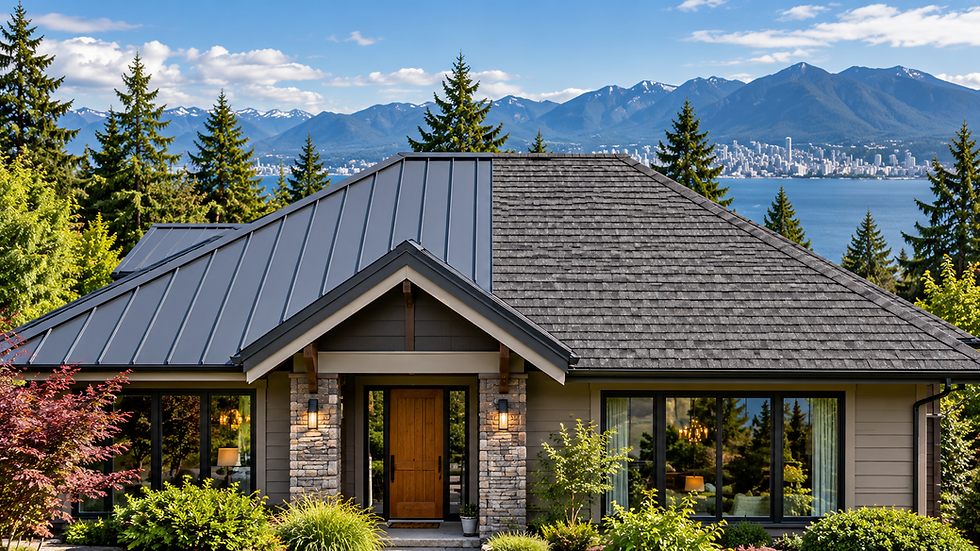
Standing Seam Metal Roofing
Standing seam roofing features long metal panels joined by raised seams.
Depending on the system, concealed fasteners and mechanically locked seams can provide excellent water-shedding performance.
Standing seam is particularly appealing to homeowners who prefer a clean, modern architectural appearance.
Ironstone Slate Metal Roofing
Ironstone Slate is designed to recreate the appearance of traditional slate roofing while using a steel roofing system.
It offers a more traditional architectural appearance for homeowners who want the character of slate without using conventional natural slate tiles.
Ironwood Shake Metal Roofing
Ironwood Shake provides a wood-shake-inspired appearance using metal roofing materials.
It can appeal to homeowners who appreciate the appearance of cedar shake but want to avoid some of the maintenance concerns associated with natural wood roofing.
All three options should be evaluated based on the home's roof geometry, structural requirements, product specifications, installation details, and the homeowner's aesthetic preferences.
For homeowners planning to remain in their property for many years, the long-term replacement cycle can be just as important as the initial installation price.
Can You Install a Metal Roof Over Existing Asphalt Shingles?
In certain situations, yes.
Some metal roofing systems can be installed over an existing asphalt shingle roof when the existing roofing assembly is suitable and the installation complies with applicable requirements.
This approach is often called a roof overlay or roof recover.
However, an overlay should not be used to conceal:
Rotting or deteriorated roof decking
Active water intrusion
Structural problems
Excessive existing roofing layers
Unresolved ventilation or moisture issues
The suitability of an overlay also depends on the roofing manufacturer's installation requirements and applicable municipal building rules.
If the existing roof is unsuitable, removing the old shingles and inspecting the underlying decking may be the better long-term approach.
The correct decision should be based on the actual condition of the roof, not simply the lowest initial installation cost.
How Much Does It Cost to Replace a Roof in the Lower Mainland?
Roof replacement costs in British Columbia vary significantly from one property to another.
Important factors include:
Roof size and total roofing area
Roof pitch and accessibility
Number of valleys, dormers, and penetrations
Existing roof removal and disposal
Condition of the roof decking
Selected roofing material
Flashing and ventilation requirements
Skylights, chimneys, and other details
Labor and installation complexity
Asphalt shingles generally have a lower initial installation cost than premium metal roofing systems.
However, the initial cost is only one part of the financial comparison.
Homeowners planning to own their property for decades should also consider future replacements, maintenance, disposal, and the potential cost of repairing
water damage.
A lifetime cost analysis can help compare different roofing systems over a longer ownership period.
Frequently Asked Questions About Roof Replacement in BC
How do I know if my roof needs replacing or just repairing?
Localized damage, such as one missing shingle or a damaged flashing detail, may be repairable. Widespread shingle deterioration, recurring leaks, extensive decking damage, or increasingly frequent repairs can make replacement the better option.
A professional inspection is the most reliable way to decide.
How long does an asphalt shingle roof last in Vancouver?
There is no fixed lifespan for every asphalt roof. Some roofs in the Lower Mainland experience significant deterioration after 10–15 years, while properly installed and maintained systems can last longer. Product quality, ventilation, shade, moisture, roof design, and maintenance all influence service life.
Does moss mean I need a new roof?
No. Moss growth alone does not necessarily mean the roof needs replacement. If the underlying shingles remain sound, professional cleaning or appropriate treatment may be sufficient. Replacement becomes more likely when moss is accompanied by extensive shingle deterioration, leaks, or decking damage.
Can I replace my roof during winter in BC?
Yes. Roof replacement can be performed during winter when weather conditions, product requirements, and safe installation practices permit. Scheduling and installation methods must account for rainfall, temperature, wind, and other site conditions.
Can I install metal roofing over old shingles?
Sometimes. Certain metal roofing systems may be installed over an existing asphalt roof if the roof deck is sound, the existing assembly is suitable, and the installation meets applicable requirements. An inspection is necessary before recommending this approach.
How long does a metal roof last in British Columbia?
Quality metal roofing systems can provide several decades of service. Depending on the product, installation, environment, and maintenance, some systems are designed for service lives of 40–70 years or more. Actual performance varies, and warranty coverage should be reviewed separately from expected lifespan.
Is a roof inspection worth it before getting a replacement quote?
Yes. A thorough roof and attic inspection can identify problems that may affect the scope and cost of a roofing project. It also helps determine whether repair, maintenance, rejuvenation, or full replacement is the most appropriate next step.
Final Thoughts: Recognizing the 7 Signs You Need a New Roof in BC
Your roof doesn't need to be actively leaking before you start planning for its replacement.
Curling shingles, recurring leaks, granule loss, moss growth, sagging roof sections, attic moisture, and frequent repairs are all warning signs worth investigating.
For homeowners throughout Vancouver, the Lower Mainland, and the Fraser Valley, addressing these problems early can help protect the home and prevent avoidable expenses.
However, recognizing the 7 Signs You Need a New Roof in BC is only the first step.
The most important next step is understanding the actual condition of your roof and determining whether maintenance, repairs, treatment, or replacement will provide the best long-term result.
Not Sure Whether Your Roof Needs Replacing?
At Valley Metal Roofing, our priority is your peace of mind.
We help Lower Mainland homeowners understand their roofing options through a detailed in-home consultation that includes:
A comprehensive roof inspection
A comprehensive attic inspection
An assessment of the existing roofing system
An introduction to our metal roofing products
A lifetime cost analysis to compare long-term roofing investments
Whether you're considering Standing Seam, Ironstone Slate, or Ironwood Shake, our goal is to help you make an informed decision based on your home's needs and your long-term plans.
Book your Intro Call with Valley Metal Roofing to discuss your roof and take the first step toward a roofing solution designed to last.
Valley Metal Roofing - Our Priority Is Your Peace of Mind.

Comments