
Metal Roof vs. Asphalt Shingles Cost in BC: The True 50-Year Cost
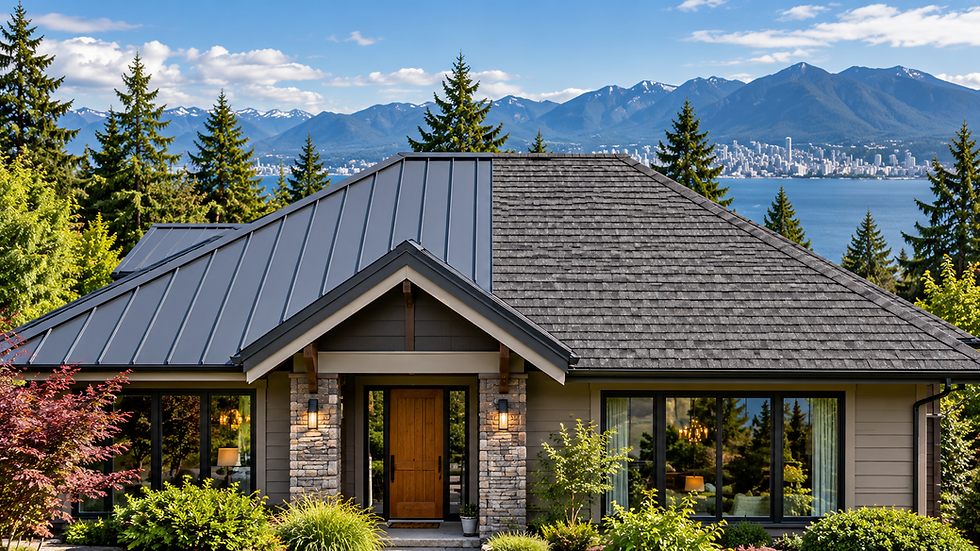
If you are deciding between a metal roof and asphalt shingles for your home in British Columbia, the initial quote only tells part of the story.
Asphalt shingles will generally cost less upfront. A quality metal roofing system requires a larger initial investment. But for homeowners planning to own their property for decades, there is another question worth asking:
What will my roof actually cost over the next 50 years?
That changes the comparison.
When looking at Metal Roof vs. Asphalt Shingles Cost in BC: The True 50-Year Cost, you have to consider more than today's installation price. You also need to think about how many times the roof may need to be replaced, what those future replacements could cost, tear-off and disposal expenses, maintenance, repairs, and the inconvenience of completing another major roofing project.
For a Lower Mainland homeowner, the real comparison may not be one asphalt roof versus one metal roof.
It may be one long-term metal roofing system versus several asphalt roofing cycles over the life of the home.
Metal Roof vs. Asphalt Shingles Cost in BC: The True 50-Year Cost
The simplest answer is this:
Asphalt shingles are generally less expensive today. Metal roofing can become more cost-effective over the long term if it reduces the number of complete roof replacements required during the life of the property.
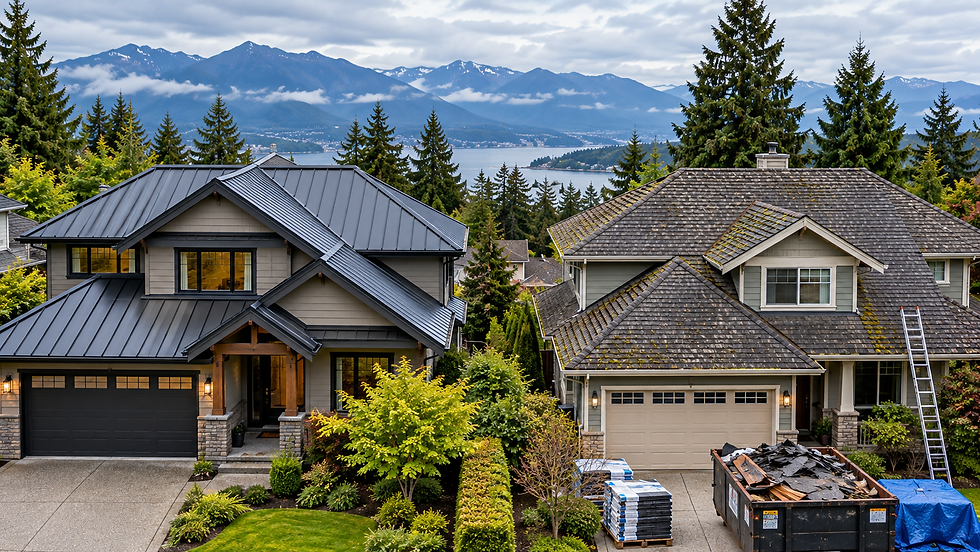
That does not mean metal roofing will automatically save every homeowner money. Actual performance depends on the roofing product, installation quality, roof design, ventilation, maintenance, environmental exposure, and many other factors.
But homeowners should understand the difference between purchase price and lifetime cost.
Cost Factor | Asphalt Shingles | Metal Roofing |
Initial installation cost | Lower | Higher |
Long-term replacement potential | May require multiple replacements | Designed as a longer-term roofing solution |
Tear-off and disposal | May occur with each replacement | Potentially fewer complete tear-offs |
Future labour costs | Repeated when reroofing | Potentially reduced |
Maintenance | Required | Required |
Initial budget requirement | Lower | Higher |
Long-term cost predictability | More dependent on future replacements | Greater upfront investment |
Best fit | Lower initial budget | Long-term ownership and lifecycle value |
The important point is not that one material is universally better.
It is that the cheapest roof to purchase today is not necessarily the cheapest roof to own for 50 years.
Why the Initial Roofing Quote Can Be Misleading
Imagine you receive two quotes.
One is for asphalt shingles. The other is for a premium metal roofing system.
The asphalt quote is considerably lower.
If you compare only those two numbers, asphalt is the obvious financial winner.
But that comparison assumes both roofs will provide the same service life.
If the asphalt roof eventually needs to be replaced and the metal roof remains serviceable, the homeowner now has to include another entire roofing project in the calculation.
If another asphalt replacement is required later, another project gets added.
Each replacement involves much more than purchasing another bundle of shingles.
It can include:
Roofing materials
Labour
Removal of the existing roof
Disposal
Underlayment
Flashing
Roof penetrations
Ventilation components
Possible roof-deck repairs
Delivery and transportation
Cleanup
Other project-specific costs
There is also another factor that becomes increasingly important the further into the future you look:
The next roof probably will not cost what a roof costs today.
Future Asphalt Roof Replacements Could Cost More
Construction prices change over time.
Materials, labour, transportation, disposal, insurance, fuel, equipment, and other expenses can all affect what a future roofing project costs.
Consider a simple example.
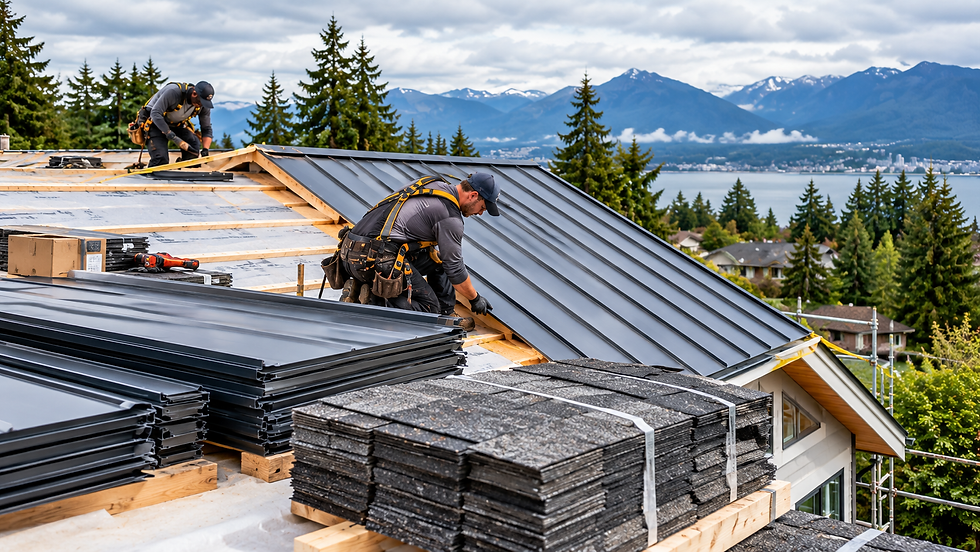
Suppose an asphalt roof costs $15,000 today.
For illustration, assume the cost of completing the same roofing project increases by an average of 2.5% per year.
The theoretical future price would look approximately like this:
When the Roof Is Installed | Illustrative Project Cost |
Today | $15,000 |
15 years from now | $21,700 |
30 years from now | $31,500 |
45 years from now | $45,600 |
These figures are not a prediction of future roofing prices. Actual construction costs could increase faster, slower, or fluctuate considerably from year to year.
The example simply demonstrates something homeowners can easily overlook:
Replacing a roof several decades from now is unlikely to cost exactly what replacing it costs today.
That can have a major impact on a 50-year calculation.
A Simple 50-Year Metal Roof vs. Asphalt Shingles Cost Example
Let's look at a hypothetical Lower Mainland home.
Assume the homeowner is comparing:
An asphalt roof costing $15,000
A metal roof costing $35,000
For this example, assume the asphalt roof is replaced every 15 years and future roofing costs increase by an average of 2.5% annually.
Also assume the metal roofing system remains serviceable throughout the 50-year comparison.
Here is what happens:
Year | Asphalt Roofing Cost | Metal Roofing Cost |
Year 0 | $15,000 | $35,000 |
Year 15 | $21,700 | — |
Year 30 | $31,500 | — |
Year 45 | $45,600 | — |
Approximate 50-Year Total | $113,800 | $35,000 |
At first glance, the difference is enormous.
But this example needs to be interpreted correctly.
It does not mean every $15,000 asphalt roof will cost a homeowner $113,800 over 50 years. It also does not mean every $35,000 metal roof will remain completely maintenance-free for 50 years.
The example is designed to demonstrate how dramatically the equation changes once multiple future roof replacements and inflation are included.
Change the lifespan assumptions and the numbers change.
If an asphalt roof performs for much longer before replacement, its 50-year cost decreases. If a metal roof requires repairs or maintenance, those costs need to be included as well.
The right approach is to compare several realistic scenarios for your particular property.
How Long Do Asphalt Shingles Last in the Lower Mainland?
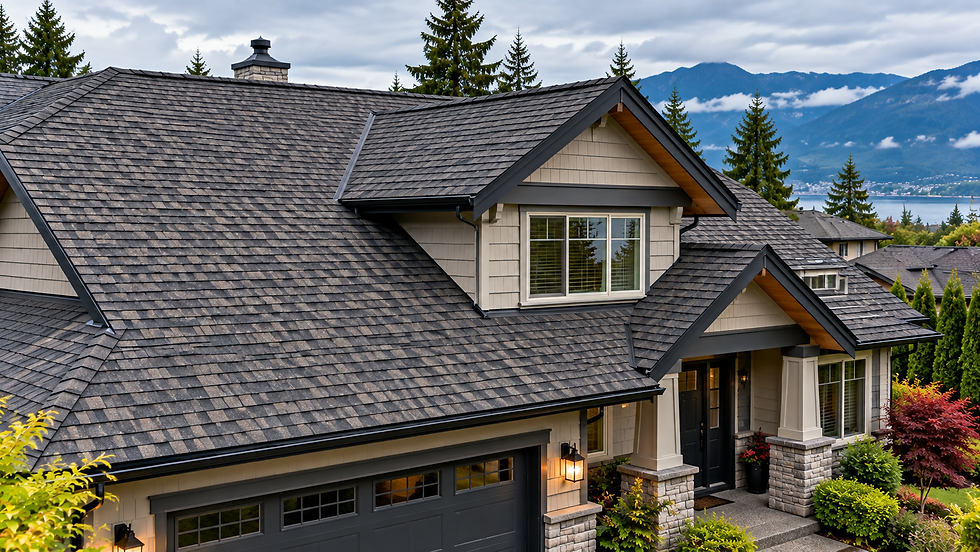
There is no single lifespan that applies to every asphalt roof in British Columbia.
The actual service life of asphalt shingles depends on factors including:
Product quality
Installation
Roof pitch
Roof orientation
Attic ventilation
Moisture
Shade
Trees surrounding the property
Moss and algae growth
Debris accumulation
Flashing details
Roof-deck condition
Maintenance
Weather exposure
This is particularly relevant in the Lower Mainland.
Homes throughout Vancouver, Burnaby, Coquitlam, Maple Ridge, Surrey, Langley, Mission, Chilliwack and surrounding communities experience significant periods of wet weather.
A roof surrounded by mature trees and receiving limited sunlight may experience very different conditions from an open roof with good sun exposure and effective drainage.
That is why homeowners should be cautious about treating a manufacturer's product rating as a guaranteed real-world lifespan.
Your actual house and roof conditions matter.
How Long Can a Metal Roof Last?
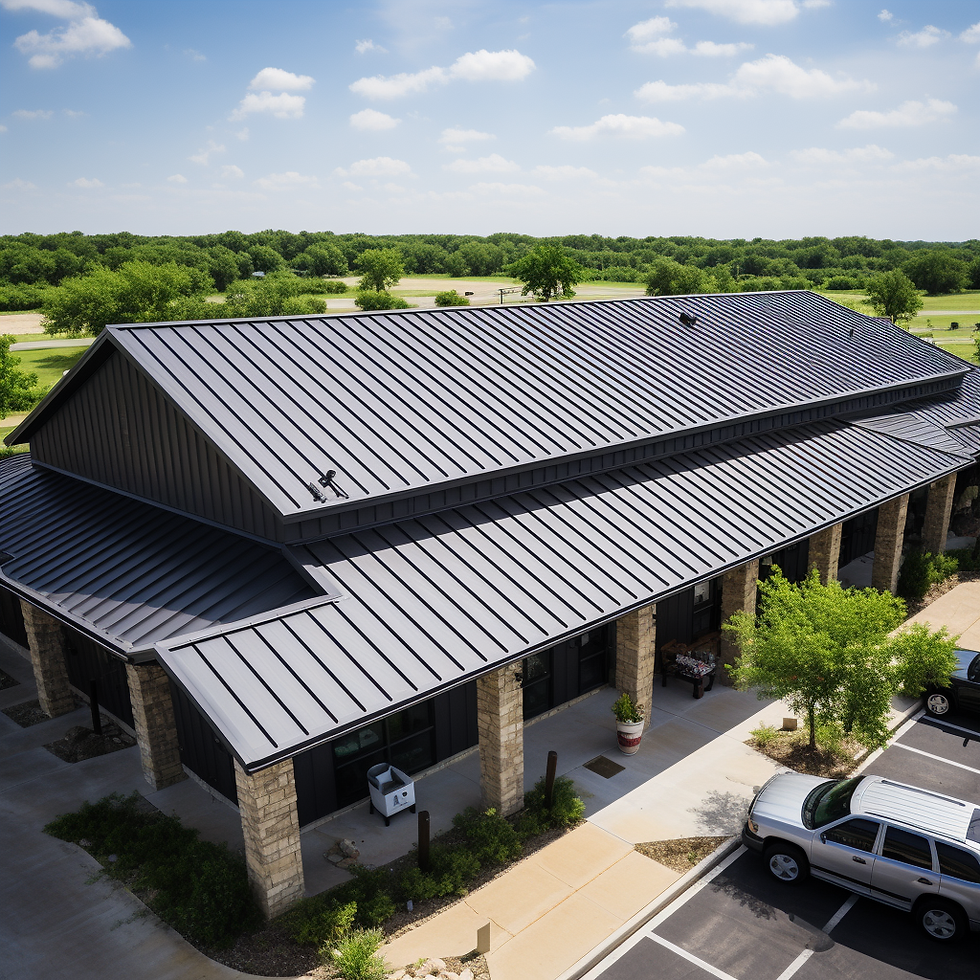
One of the main reasons homeowners choose metal roofing is its long service-life potential.
But there is an important distinction:
“Metal roofing” is not one single roofing product.
There are several types of metal roofing systems, including:
Standing seam
Metal shingles
Steel shake profiles
Steel slate profiles
Exposed-fastener systems
The design and quality of these systems can differ substantially.
Long-term performance can depend on:
Metal type and thickness
Protective coatings
Panel or shingle design
Fastening system
Underlayment
Flashing
Roof ventilation
Installation quality
Roof geometry
Environmental exposure
Maintenance
A properly designed premium metal roofing system should therefore be evaluated as a complete roof system, not simply as sheets of metal.
Standing Seam Metal Roof vs. Asphalt Shingles Cost
Standing seam is one of the most common options for BC homeowners looking for a long-term roofing solution.
Standing seam panels use concealed fastening systems rather than leaving the primary panel fasteners exposed directly to the weather.
The system costs more upfront than a typical asphalt roof, but homeowners considering standing seam are usually making a different type of purchasing decision.
Instead of asking:
“What is the cheapest way to replace my roof today?”
They are asking:
“How can I reduce the likelihood that I will need to replace this roof again?”
For someone planning to sell a property shortly, that distinction may not carry as much weight.
For someone planning to stay in their home for another 20, 30 or 40 years, it can become much more important.
Metal Roof vs. Asphalt Shingles Cost in BC: The True 50-Year Cost of Standing Seam
When standing seam and asphalt are compared over 50 years, the largest financial variable is generally the number and cost of future asphalt replacements.
If no future replacement occurs during your ownership period, the lower upfront asphalt cost can be attractive.
If the asphalt roof needs to be replaced once, the cost gap begins to narrow.
If multiple replacements are required, future labour, materials, disposal and inflation can change the economics substantially.
This is why a homeowner considering standing seam should request both an installation-cost comparison and a lifecycle-cost comparison.
Why BC's Wet Climate Matters
A roof in the Lower Mainland has one very important job:
Keep water out of the building.
Our climate makes roof design, drainage, flashing and installation particularly important.
Frequent rainfall means water must move efficiently from the roof surface into the drainage system without entering vulnerable areas around:
Valleys
Chimneys
Skylights
Plumbing vents
Walls
Dormers
Eaves
Roof transitions
The roofing material itself is only one component of that system.
A premium roofing product cannot compensate for poor flashing or improper installation.
This applies to both asphalt and metal roofing.
What Other Costs Should You Include in a 50-Year Roof Comparison?
A proper lifecycle comparison should look beyond roofing material.
Tear-Off and Disposal
If an asphalt roof is replaced multiple times, the existing roofing may need to be removed and disposed of each time.
That creates additional labour and disposal costs with every roofing cycle.
Roof Deck Repairs
Removing old roofing exposes the roof deck.
If deteriorated or damaged areas are discovered, plywood or other decking repairs may be required before the new roof is installed.
That does not mean every reroof requires new decking. It simply means future replacements can expose additional work that cannot always be predicted decades in advance.
Flashing
Roof flashing protects some of the most vulnerable areas of the roof.
Every reroofing project may require work around chimneys, skylights, valleys, walls and penetrations.
The more complicated the roof, the more significant these details become.
Labour
Roof installation is labour-intensive.
Replacing a roof multiple times means paying for roofing labour multiple times at whatever market rates exist in the future.
Maintenance and Repairs
Neither metal nor asphalt should be considered completely maintenance-free.
Homeowners should periodically monitor their roof and drainage system for:
Debris
Blocked gutters
Flashing issues
Damaged roofing
Moss or organic growth
Penetration issues
Sealant deterioration where applicable
Damage following severe weather
Regular inspections can help identify smaller problems before they become larger ones.
The Cost of Disruption
Not every cost appears on an invoice.
Roof replacement means having another construction project at your home.
That can involve:
Delivery trucks
Roofing materials
Dump trailers or disposal bins
Tear-off
Noise
Crews around the property
Cleanup
Weather delays
Some homeowners place significant value on reducing the number of times they need to go through that process.
Is a Metal Roof Worth the Cost in BC?
A metal roof can be worth the additional upfront cost for BC homeowners who intend to own their property long term and want to reduce future roof replacement cycles.
It may not be the right financial decision for everyone.
A homeowner expecting to sell in a few years has a different financial horizon from someone renovating their forever home.
Before making the decision, ask yourself:
How long do I expect to own this property?
What condition is my current roof in?
What would a complete asphalt replacement cost today?
What would the metal roofing system I am considering cost?
How many future roof replacements am I trying to avoid?
How complicated is my roof?
What warranties are included?
What maintenance will each roof require?
Am I comparing equivalent scopes of work?
The last question is extremely important.
Are You Actually Comparing Equivalent Roofing Quotes?
Two roofing quotes can have very different prices because they include very different scopes of work.
Before deciding one contractor or material is cheaper, determine exactly what you are receiving.
Compare:
Existing roof removal
Disposal
Underlayment
Ice and water protection
Flashing
Valleys
Eaves and rakes
Roof vents
Skylights
Chimney details
Roof-deck repairs
Material specifications
Coating or finish
Manufacturer warranty
Workmanship warranty
Cleanup
A low quote that excludes important components is not necessarily cheaper once the complete project is considered.
When Does a Metal Roof Break Even Compared With Asphalt?
There is no universal break-even point.
For one homeowner, the financial crossover could occur after the first asphalt
replacement.
For another, it could take considerably longer.
For some homeowners who sell shortly after installation, it may never occur during their ownership.
The break-even point depends on:
Initial asphalt cost
Initial metal cost
Actual roof lifespan
Future roofing prices
Inflation
Maintenance
Repairs
Tear-off costs
Roof complexity
Ownership period
The most useful way to calculate it is to compare multiple scenarios rather than assume one specific roof lifespan.
For example, calculate what happens if your asphalt roof lasts:
15 years
20 years
25 years
Then compare those scenarios against the metal roofing system you are considering.
That gives you a much more useful picture than simply comparing two installation quotes.
Can You Install Metal Roofing Over Asphalt Shingles?
In some situations, a metal roofing system may be installed over an existing asphalt roof.
Whether that is appropriate depends on the existing roof, roof deck, selected metal system, manufacturer requirements and applicable building requirements.
Before installing over an existing roof, the property should be assessed for:
Existing roofing condition
Roof-deck condition
Moisture
Attic ventilation
Existing roofing layers
Flashing
Roof geometry
Manufacturer requirements
Applicable local requirements
Installing metal over an existing roof should never be used simply to conceal underlying problems.
If there are concerns about moisture, deterioration or the roof deck, removing the existing roofing can allow those issues to be identified and corrected before the new roof is installed.
Does Metal Roofing Increase Home Value?
A quality roof can certainly be attractive to a future buyer, but homeowners should be cautious about assuming a specific dollar-for-dollar return on investment.
Property value depends on many factors, including:
Location
Housing market
Property condition
Neighbourhood
Buyer preferences
Roof appearance
Installation quality
A better way to think about it is from the perspective of a future buyer.
If you were comparing two similar homes, would you prefer one that may require a major roof replacement in the foreseeable future or one with a recently installed long-term roofing system?
That does not guarantee a particular selling price, but roof condition can absolutely influence how buyers perceive the future costs associated with a property.
Which Roof Is Better for Your Situation?
The answer depends on your priorities.
Asphalt Shingles May Make More Sense If:
Your main priority is minimizing upfront cost
You have a limited renovation budget
You expect to sell the property relatively soon
You are comfortable with the possibility of future roof replacement
Metal Roofing May Make More Sense If:
You plan to own the property long term
You want to reduce future reroofing cycles
You are comfortable investing more upfront
You are evaluating lifetime rather than initial cost
You want a premium roofing system
You are making long-term improvements to the property
Neither decision is automatically wrong.
The important thing is understanding what you are buying and how long you expect it to serve you.
Frequently Asked Questions About Metal Roof vs. Asphalt Shingles Cost in BC
Is a metal roof more expensive than asphalt shingles in BC?
Yes. A quality metal roofing system will generally have a higher initial installation cost than asphalt shingles. The potential financial advantage comes from its longer-term service potential and the possibility of reducing future complete roof replacements.
Is metal roofing cheaper over 50 years?
It can be, but not in every situation. The answer depends primarily on initial prices, how long each roofing system actually lasts, future replacement costs, repairs, maintenance and how long you own the property.
How many asphalt roofs might I need over 50 years?
There is no fixed number. Roof lifespan varies significantly based on the product, installation, ventilation, roof design, exposure and maintenance. Homeowners comparing lifetime costs should calculate several possible replacement scenarios rather than relying on one assumed lifespan.
Can a metal roof last 50 years?
Quality metal roofing systems are commonly chosen because of their long service-life potential. However, actual lifespan depends on the system, material, coatings, installation, roof design, environmental exposure and maintenance. No roof should be assumed to last an exact number of years based solely on the roofing material.
Is standing seam worth the extra money?
Standing seam can make sense for homeowners who prioritize long-term ownership and want a premium concealed-fastener roofing system. Whether it is financially worthwhile for your property depends on the installation cost, expected ownership period and alternatives you are comparing.
Does a metal roof require maintenance?
Yes. Metal roofing still requires periodic inspection and maintenance. Drainage, debris, flashings, penetrations, sealants where applicable and potential damage should be monitored.
Is asphalt roofing a bad choice?
No. Asphalt shingles remain a practical option for homeowners prioritizing a lower initial investment. The key is understanding that a lower purchase price does not necessarily mean a lower lifetime cost.
What is the cheapest roof for a BC home?
Asphalt shingles will generally have a lower initial installation cost than premium metal roofing. However, homeowners planning to own their property for decades should consider future replacement and maintenance costs before deciding which roof is cheapest over the long term.
Is metal roofing suitable for the Lower Mainland?
Metal roofing can be well suited to Lower Mainland conditions when the complete roofing system is properly designed and installed. Flashing, drainage, ventilation, underlayment and workmanship remain critical regardless of the roofing material.
The True Cost of Your Roof Is More Than the Price You Pay Today
When comparing Metal Roof vs. Asphalt Shingles Cost in BC: The True 50-Year Cost, there is one idea worth remembering:
Buying a roof and owning a roof are two different financial calculations.
Asphalt shingles generally cost less upfront. Metal roofing generally requires a larger initial investment.
But if an asphalt roof needs to be replaced several times during the period that a properly installed metal roofing system remains serviceable, the lifetime cost equation can change dramatically.
Future labour, materials, tear-off, disposal, repairs and inflation all need to be considered.
That does not make metal roofing automatically right for every homeowner.
It simply means that homeowners planning to stay in their Lower Mainland property for many years should look beyond today's quote before making their decision.
Find Out What the Numbers Look Like for Your Home
Online examples are useful for understanding how lifecycle costs work, but your roof is not an online average.
Roof size, pitch, complexity, accessibility, existing roofing, roof-deck condition, valleys, skylights, chimneys and the metal roofing system you select can all affect the final investment.
At Valley Metal Roofing, we help homeowners throughout the Lower Mainland understand their roofing options before making a long-term decision. Our process includes assessing the roof and attic, discussing the available roofing systems and helping you compare the initial investment with the longer-term costs of your options.
If you are considering standing seam, metal shake, metal slate or another metal roofing system, start by finding out what the project would actually look like on your home.
Request an estimate from Valley Metal Roofing today and get a property-specific comparison so you can decide whether investing in a long-term metal roofing system makes sense for your home, budget and future plans.


Comments